
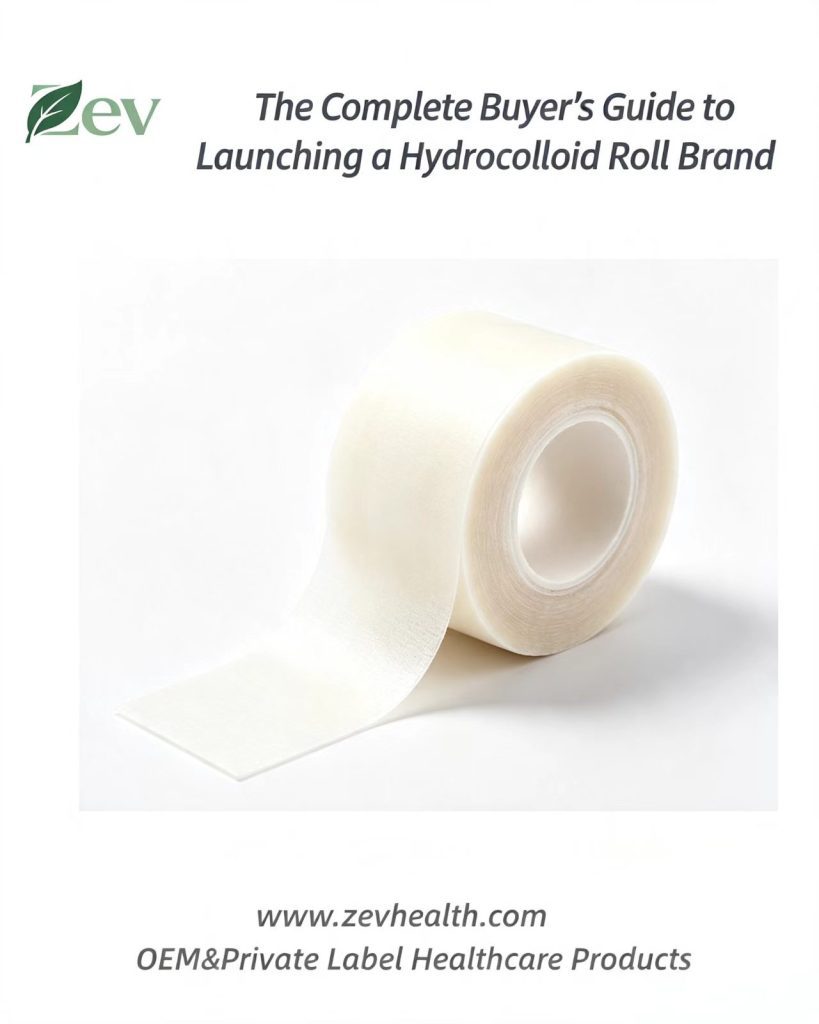
How to pick the right hydrocolloid roll, avoid costly missteps, and build a wound care brand people trust.
Interest in advanced wound care keeps climbing, and hydrocolloid dressings are riding that wave. Hospitals and pharmacy chains still dominate the space, but they’re no longer the only players — Amazon sellers, TikTok Shop brands, and Shopify entrepreneurs are all launching private-label versions of the same core product.
Almost everyone who reaches out to us asks some version of the same question:
“Which hydrocolloid roll is actually right for my brand?”
It’s rarely just about price. The right roll depends on who you’re selling to, where you’re selling it, how you want your brand to feel, and what you’re able to spend to get there.
https://zevhealth.com/product/private-label-premium-mirror-compact-hydrocolloid-acne-patches-with-custom-mirror-case/
At Zev Health, we work with everyone from large healthcare suppliers to first-time founders shipping their debut product. The advice below reflects what we tell both — because the fundamentals don’t change, even if the scale does.
Step 1: Get Clear on Who You’re Actually Selling To
Before you ask a manufacturer for a quote, sit with a few questions:
- Who is the end buyer?
- Where will the product be sold?
- What price point are you aiming for?
- What does your brand need to communicate?
The answers point you toward very different products.
If you’re selling into healthcare — hospital suppliers, medical distributors, pharmacy chains, procurement companies — expect to provide more thorough documentation and to meet stricter regulatory expectations.
If you’re selling direct to consumers — through Amazon, Shopify, TikTok Shop, or into outdoor, sports, first aid, or beauty retail — packaging, price, user experience, and reviews tend to matter more than clinical paperwork.
Neither path is more legitimate than the other. They’re just built for different buyers.
Step 2: Sterile or Non-Sterile?
How to decide:
If your customers are hospitals, clinics, or other healthcare providers, sterile is usually the safer fit, both for expectations and regulation.
If you’re targeting hikers, athletes, travelers, or everyday first-aid users, non-sterile often hits the right balance of cost and performance.
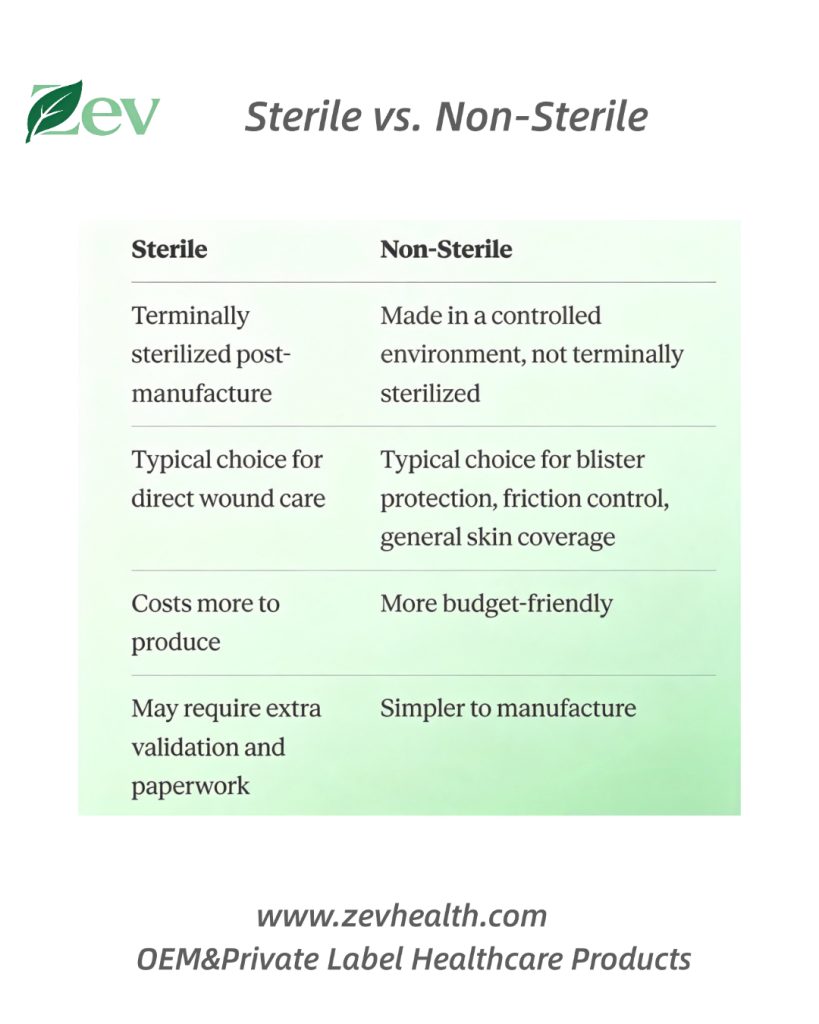
One caveat that applies everywhere: regulatory classifications shift from country to country, so confirm the rules for each market you plan to sell into before locking in your spec.
Step 3: Medical Use or Consumer Use?
A related question we hear constantly: does my product need to be positioned for medical use, or is general consumer use enough?
It comes down to your business model and the claims you intend to make.
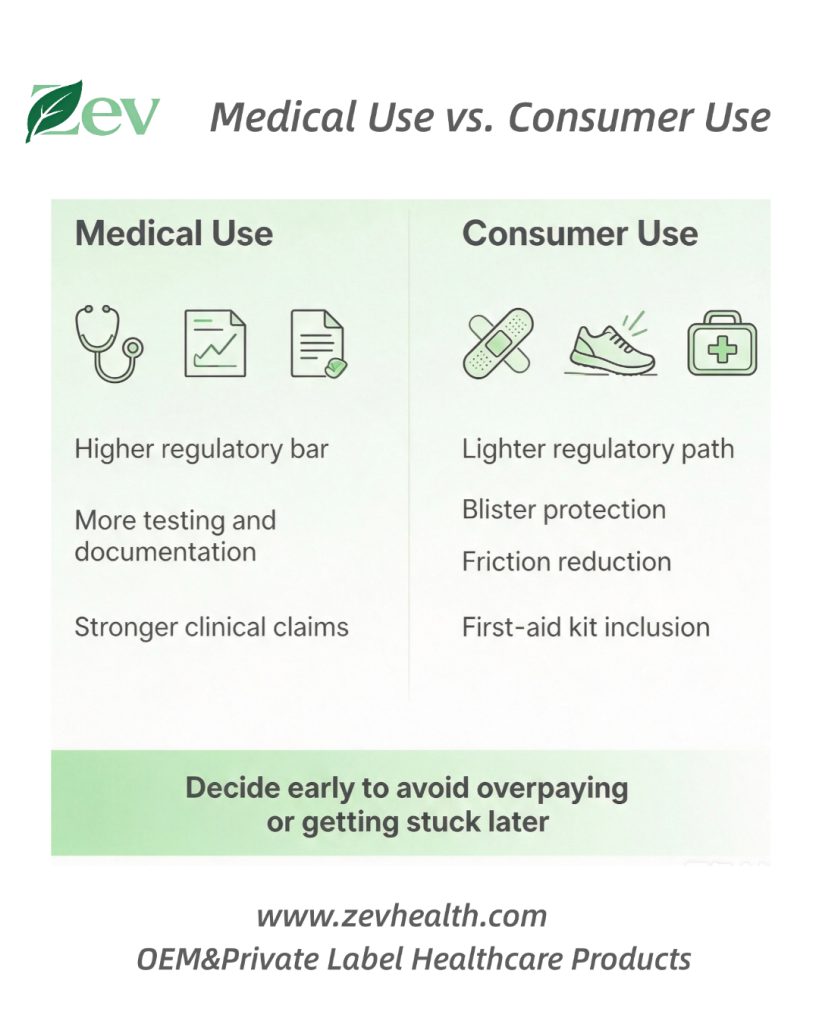
Medical-use products typically demand more testing and documentation, and the regulatory bar is higher.
Consumer-use products — often marketed around blister protection, friction reduction, or first-aid kit inclusion — usually follow a lighter regulatory path.
Nailing this down early saves you from over-specifying (and overpaying) or under-specifying (and getting stuck later).
Step 4: Why Two “Similar” Quotes Can Look So Different
It’s common to get two quotes that seem to describe the same product but land at very different prices. The gap usually comes down to specs that aren’t always obvious on paper:
- Sterile vs. non-sterile production
- Thickness of the hydrocolloid layer
- Quality of the backing film
- Adhesive strength & performance
- Roll size
- Packaging design
- Custom printing and branding
- Testing and technical
- documentation Order volume
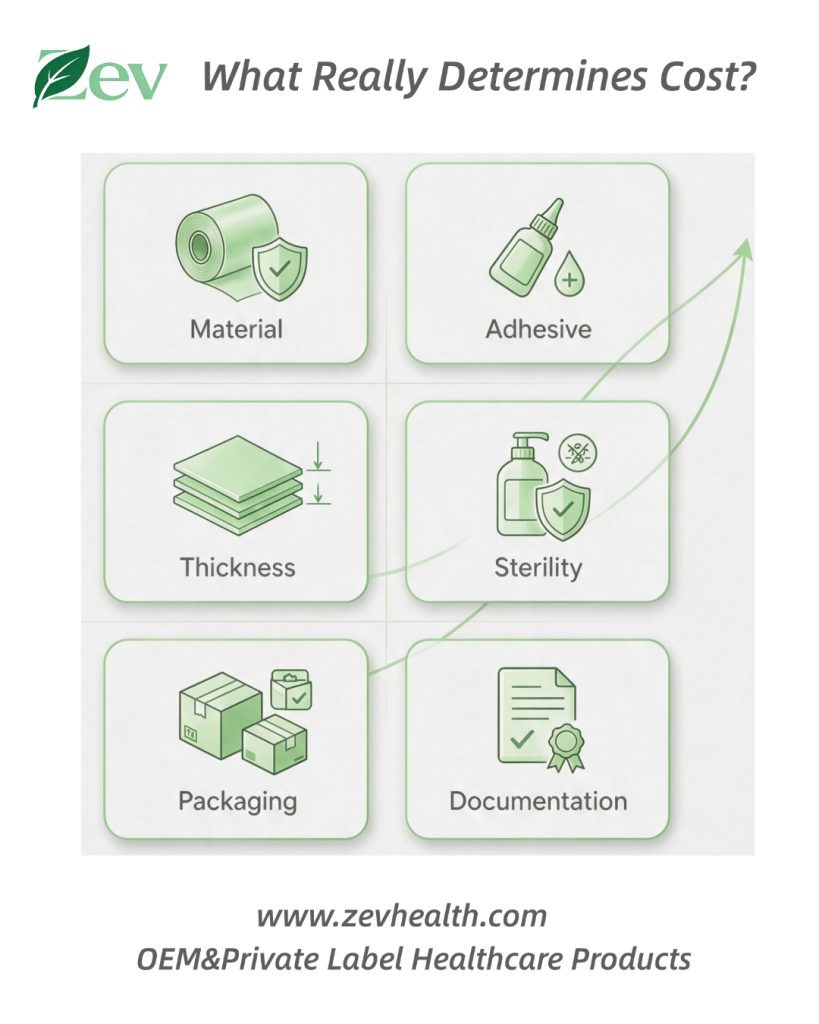
The cheapest quote isn’t automatically the smartest choice. The right product is the one that actually fits your market and supports where you want your brand to go.
Step 5: Let Your Brand Shape the Product
Your product spec should follow your brand strategy, not the other way around.
Going premium? Lean into higher-grade materials, elevated packaging, a distinct visual identity, thorough documentation, and pricing that reflects it.
Going value-focused? Prioritize dependable performance, efficient packaging, competitive pricing, and lean manufacturing.
Both strategies work — they just need to be aimed at the customers who actually want them.
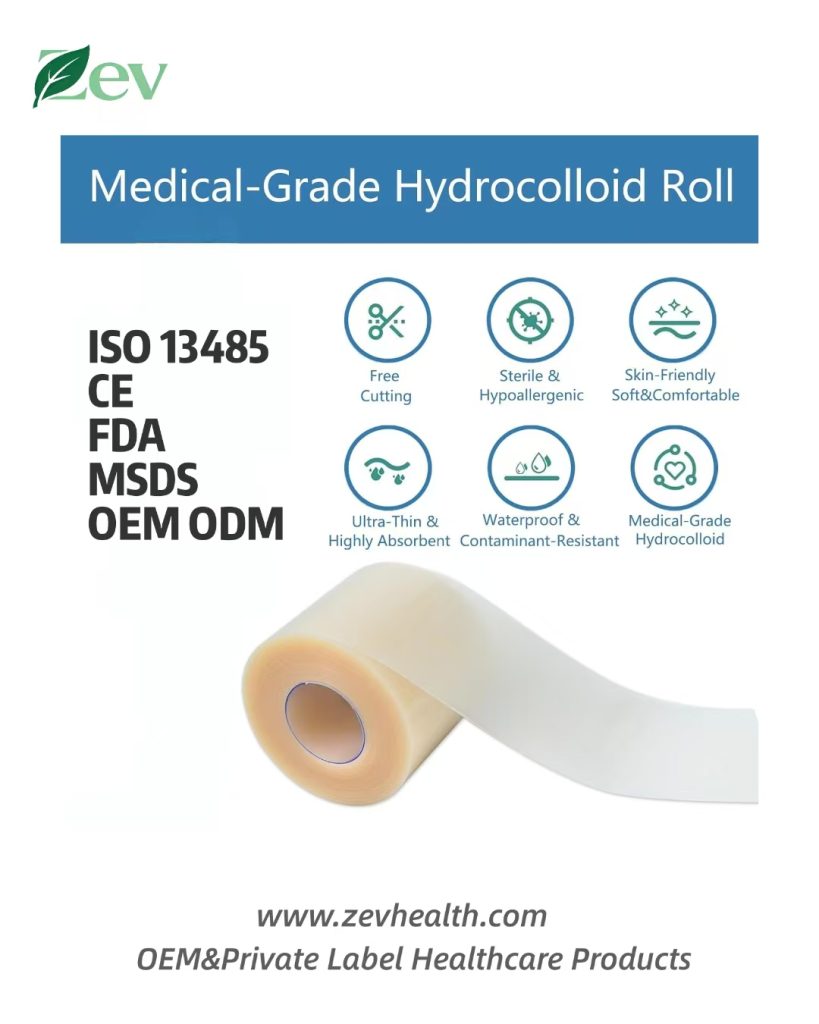
Many founders start small: Amazon, TikTok Shop, Shopify, a standalone site, a handful of local pharmacies, or a boutique retailer. Rather than committing to a large production run upfront, they test demand, collect real feedback, adjust packaging or messaging, and only then scale up.
That sequence lowers your risk and helps you land on a product that actually matches what customers want — not just what you guessed they’d want.
Step 6: Test Before You Scale
A worry we hear from nearly every new brand:
“What if I stock up and the product just doesn’t sell?”
Fair concern — and increasingly avoidable. Validating a product idea is faster than it’s ever been.
At Zev Health, we support that approach with flexible minimum order quantities on many projects, so you can get into the market without betting everything on the first run.https://zevhealth.com/odm-oem/
Step 7: Sample Before You Commit to Mass Production
Before scaling up, most customers want to see and test the real thing — performance, packaging, branding, all of it.
We build customized samples for many OEM and private-label projects, which can include:
- Custom logo printing
- Private-label packaging
- Roll size options
- Packaging structure
- Label proofing
- Material confirmation
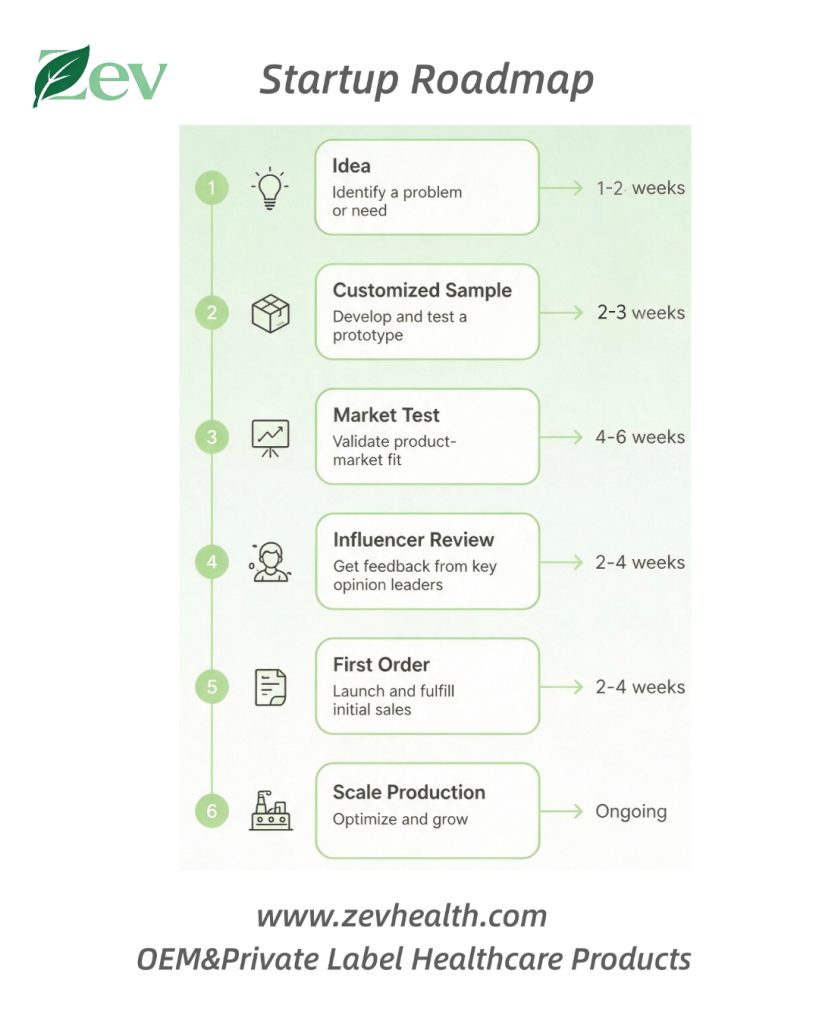
That gives your team a chance to evaluate the product properly before committing to a full production run.
Step 8: Launching Through Influencers and Creators
Plenty of brands today don’t start with a big retail order — they start with a handful of creators.
A new brand might send branded samples to athletes, healthcare professionals, or TikTok, Instagram, and YouTube creators to gather honest feedback, build early awareness, and gauge real interest before ramping up production.
We’re set up to support that stage too, with customized samples for evaluation and marketing use, so your brand looks polished even while you’re still validating the concept. Once demand picks up, production scales with it.
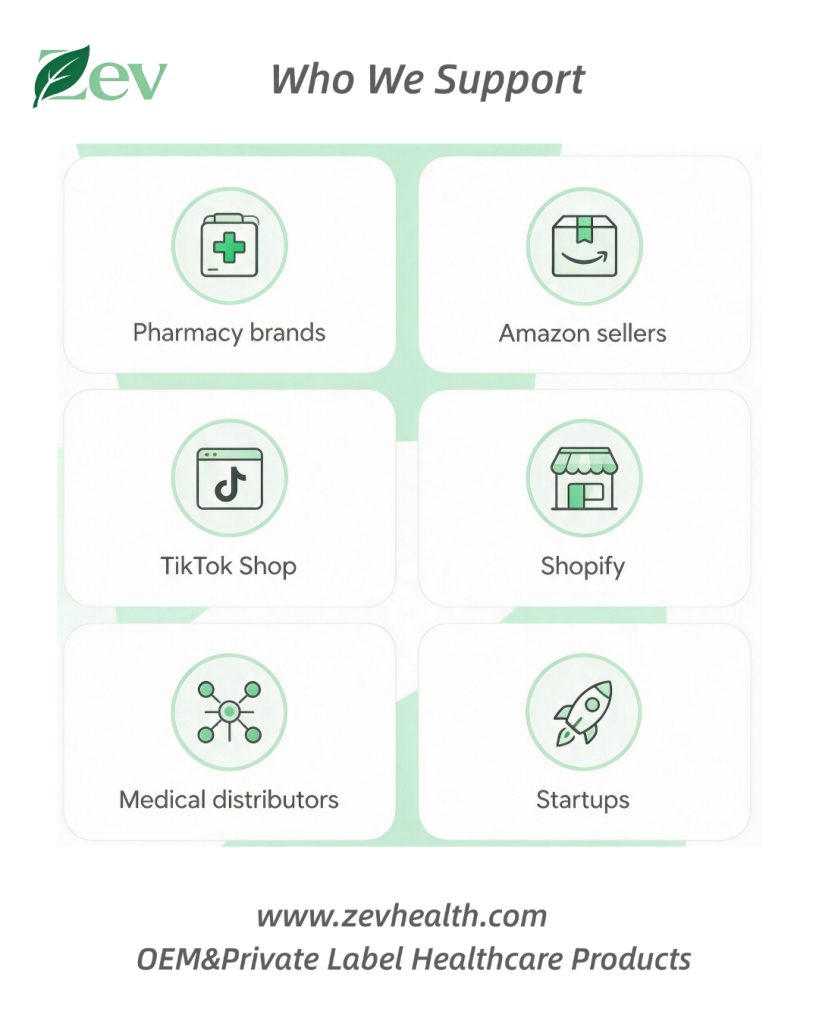
We work with:
- Pharmacy distributors
- Healthcare brands
- Medical wholesalers
- Amazon sellers
- Shopify businesses
- TikTok Shop entrepreneurs
- Outdoor brands
- First aid companies
- First-time private-label founders
Why Brands Work With Zev Health
Whether you’re a healthcare company placing your hundredth order or a founder placing your first, our process starts the same way: understand your goals, then recommend what actually fits.
What we offer:
- OEM and private-label
- Custom packaging
- Flexible MOQs
- Sample development
- Branding support
- Export documentation
- International shipping
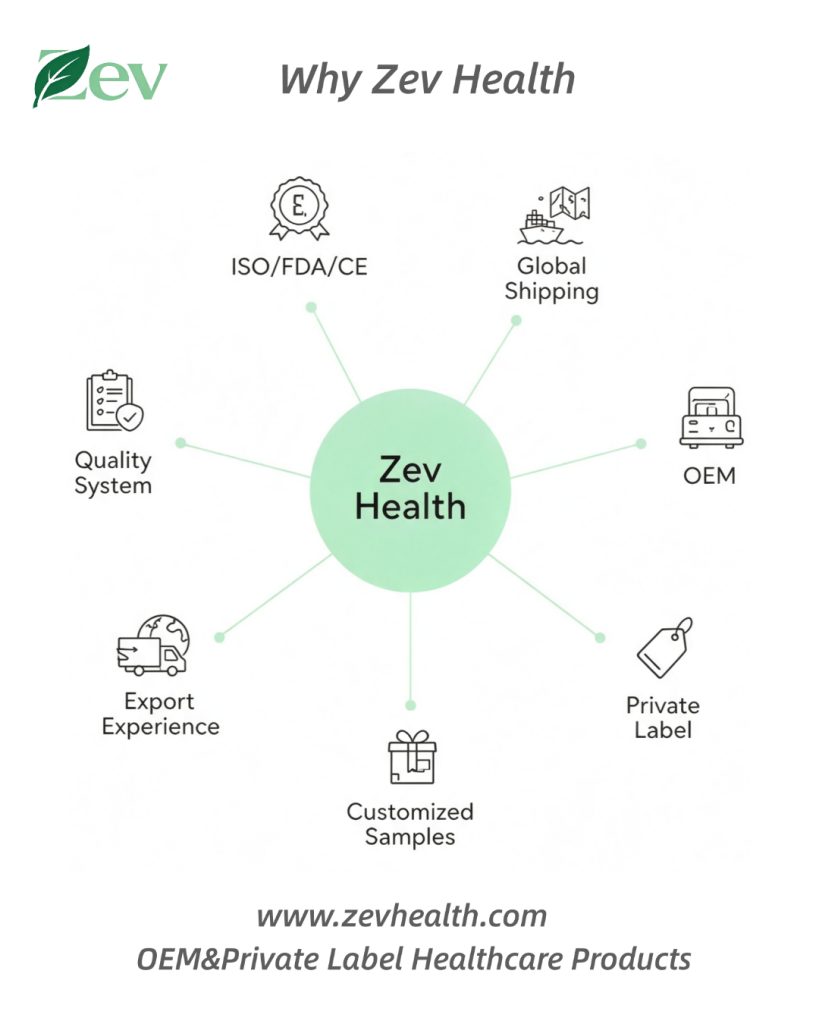
A good manufacturing partner does more than send a quote. They help you make better decisions, reduce your risk, and build something built to last.
Five Questions Every Buyer Should Ask an OEM Supplier
- Can the hydrocolloid specification be customized?
- Is sample development available before mass production?
- Can packaging be modified as my brand evolves?
- What documentation can be provided for my target market?
- Can production scale as my business grows?
Final Thoughts
Building a hydrocolloid roll brand isn’t really about finding a supplier — it’s about finding the right product for the right customer.
Get clear on your target market, understand what actually drives the spec and the price, plan your brand positioning deliberately, and validate before you scale. Do that, and you’ll build a stronger business with a lot more confidence along the way.
Whether you’re stocking pharmacy shelves or launching through Amazon, Shopify, or TikTok Shop, Zev Health is ready to help — from your first sample run to full-scale OEM production.
https://zevhealth.com/contact-get-a-quote/
If you’re planning your next hydrocolloid roll project, let’s talk about what fits your market and your budget.